
Hernando Projected vs Actual Release
Florida Department of Corrections uses the public label Current Release Date for a person who is still serving a state sentence. Florida Statutes section 944.275 calls the calculation a tentative release date. Both terms describe a date that may change. Neither is the same as the Release Date and Date Out-Custody fields on a later released-inmate record. The first is predictive; the second documents an event reported after state custody ended.
At the county level, an exact Release Date/Time in the HCSO booking detail confirms that a Hernando County Detention Center booking episode closed. It may still reflect a transfer to FDC, another county, federal authority, or another custodian. The field does not always mean unrestricted return to the community. A court order can also precede physical exit because the Clerk must prepare and deliver the paperwork before Booking completes release processing.
A pretrial detainee has no sentence-based projected date. Bond, first appearance, new warrants, detainers, the case docket, and judicial action control the path. Even a paid bond can be followed by checks and processing before the person leaves.
Find a Hernando Release Date
Start with custody type. A person at Hernando Correctional Institution is in the state-prison system, even though the prison stands next to the county jail. A person booked at the Hernando County Detention Center is in county custody unless a transfer has occurred. The two facilities do not share a roster or release calculation.
- For a current FDC prisoner, open the Corrections Offender Network and choose Inmate Population.
- Search by full name or the six-character DC Number. Compare birth date and identity details before selecting a result.
- Read Current Release Date with the sentence and incarceration history. If the value is TO BE SET, FDC review is still pending.
- For a county-jail sentence, check the HCSO booking detail and the Hernando Clerk commitment or sentence. Ask HCSO to verify its current calculation.
- For a pretrial booking, review bond and court entries without treating either as a fixed exit time.
- After the event, verify the past FDC Release Date and Date Out-Custody or the HCSO Release Date/Time.
The official FDC current-inmate detail demonstrates the public Current Release Date label and its change warning.
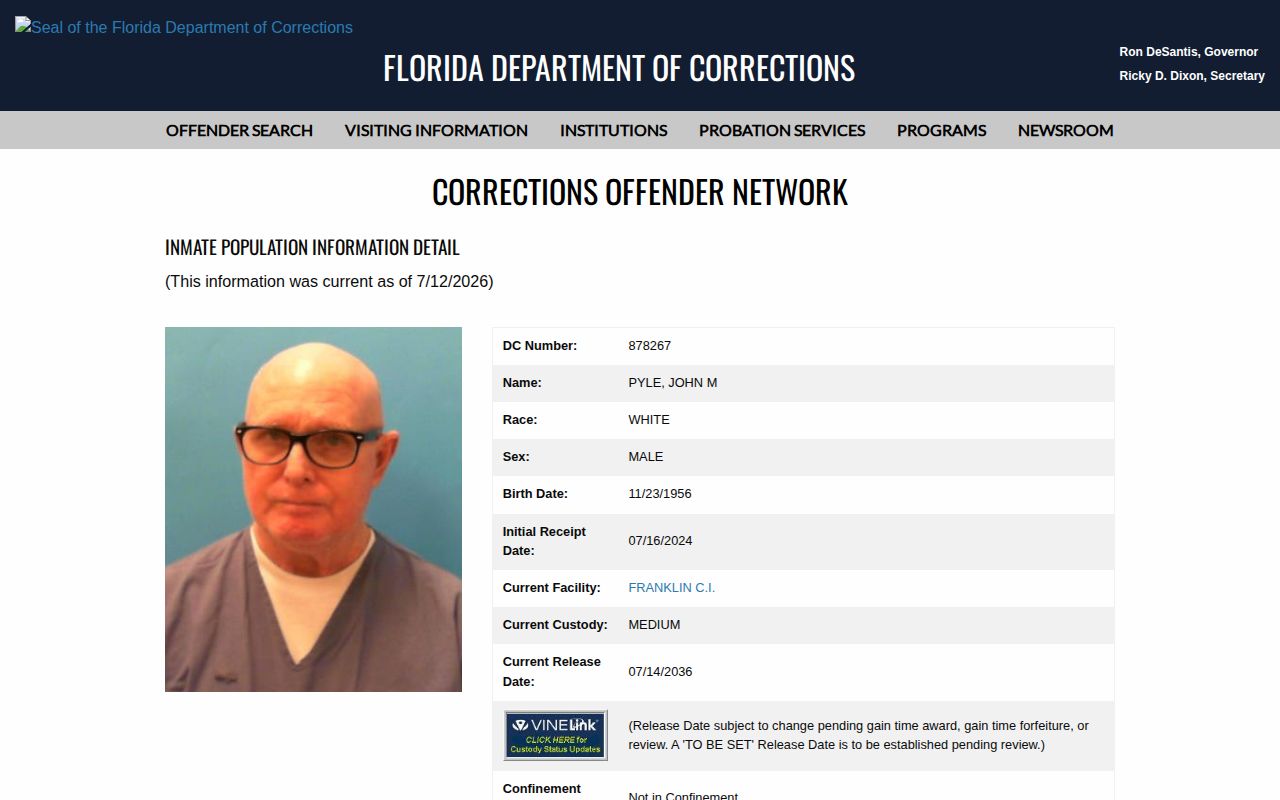
The warning beneath that field is essential because the displayed date remains subject to lawful credits, forfeitures, and review.
Note: Failure to find a county-only detainee in FDC is expected and does not answer whether that person remains at HCDC.
Hernando FDC Release Date Fields
FDC separates current inmate, released inmate, supervised population, and absconder records. The release database can include people who were released or are scheduled for release, so a match in that database alone is not proof of a past event. Its detail must be read field by field. FDC says released data refreshes nightly, while Inmate Population receives a full weekly refresh and nightly location and release-date changes. Those cycles are useful, but they are not real-time promises.
| Field or record | What it establishes | What it does not establish |
|---|---|---|
| Current Release Date | FDC's present public projection for a current inmate | That release has occurred |
| TO BE SET | Review of the projected date remains pending | A missing sentence or immediate release |
| Release Date | Date shown in an FDC released detail | End of all later supervision |
| Date Out-Custody | End date in the incarceration-history episode | Freedom from another custodian |
| Scheduled Termination Date | Planned end of a supervision episode | Completed discharge before the status changes |
| Stated Residence Upon Release | Residence stated for the release record | A guaranteed present address |
For a simple state-prison date question, FDC lists the Bureau of Admission and Release at (850) 488-9167 and dc.release@fdc.myflorida.com. A formal request can identify the DC Number, institution, actual release date, release mechanism, date out of custody, and public incarceration history.
Florida Gain-Time for Hernando Releases
Florida Statutes section 944.275 directs FDC's award and forfeiture of gain-time. FDC starts from the sentence, effective date, lawful jail credit, and concurrent or consecutive structure. It then applies credits and release mechanisms allowed by the governing law. The statute distinguishes a maximum sentence expiration date from the tentative release date produced by gain-time granted or forfeited.
For offenses committed on or after October 1, 1995, ordinary incentive gain-time cannot cause a prisoner to serve less than 85 percent of the sentence imposed. Section 921.002 states the same core Criminal Punishment Code rule. Court-awarded credit for physical incarceration counts toward that threshold. The exact offense date matters because older gain-time regimes differ, and some serious offenses or special sentence structures restrict eligibility.
The official Florida sentencing statute shows the governing 85-percent principle used in state-prison release calculations.
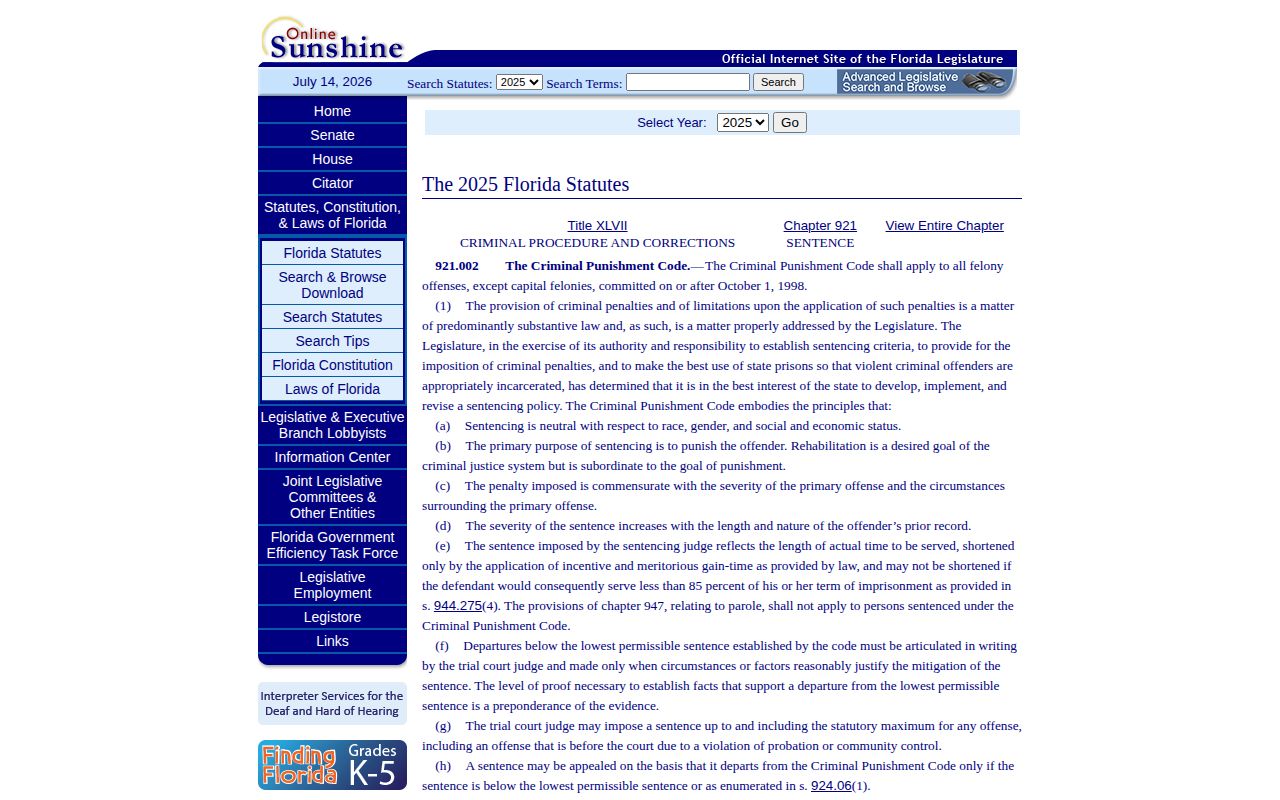
The text supports a minimum-service rule, not a stand-alone calculator for any one Hernando County sentence.
Basic gain-time applies only to specified historical periods. For offenses from January 1994 through September 1995, incentive caps depend on offense severity. For qualifying offenses on or after October 1995, the statute permits up to ten incentive days per month while maintaining the 85-percent floor. Life sentences do not gain an ordinary calculated end date through this process.
Why Hernando Release Dates Change
A projected date can move earlier or later as the lawful inputs change. FDC itself warns that Current Release Date remains subject to gain-time awards, forfeitures, or review. Other changes can arise from an amended sentence, corrected jail credit, a new commitment, escape or parole-violation time, conditional-release law, or a data correction. A date is therefore best treated as the agency's present calculation, not a promise.
| Factor | Possible effect | Where to verify |
|---|---|---|
| Gain-time award or restoration | May move a tentative date earlier within legal limits | FDC current detail and records |
| Disciplinary forfeiture | May move the date later | FDC calculation or disciplinary record |
| Jail-credit correction | Changes credited time | Court order and FDC record |
| Amended or new sentence | May restructure the total term | Hernando Clerk docket and FDC history |
| Detainer or hold | May lead to transfer when one custody term ends | Custodian and receiving agency |
| Parole or conditional release | May alter exit timing and add supervision | FCOR order and FDC supervision record |
| Review or data correction | Can change a posted field without a new court event | FDC Admission and Release |
A detainer is a request or notice from another authority concerning custody. It can mean a person leaves one facility but enters another system. That is why the Hernando release record, FDC detail, and receiving agency may all be needed.
Note: A date that moves does not by itself reveal why; use the sentence record and agency calculation to identify the cause.
Hernando County Jail Gain-Time
County sentences must not use the state-prison formula. Florida Statutes section 951.21 authorizes county commissioners to provide county-jail gain-time and extra gain-time under a local framework. HCSO did not publish an online county release-date calculator or promise a specific daily credit in the sources reviewed.
The official county gain-time statute shows the legal framework, but HCDC must apply the commitment, credited time, and local calculation to the specific person.
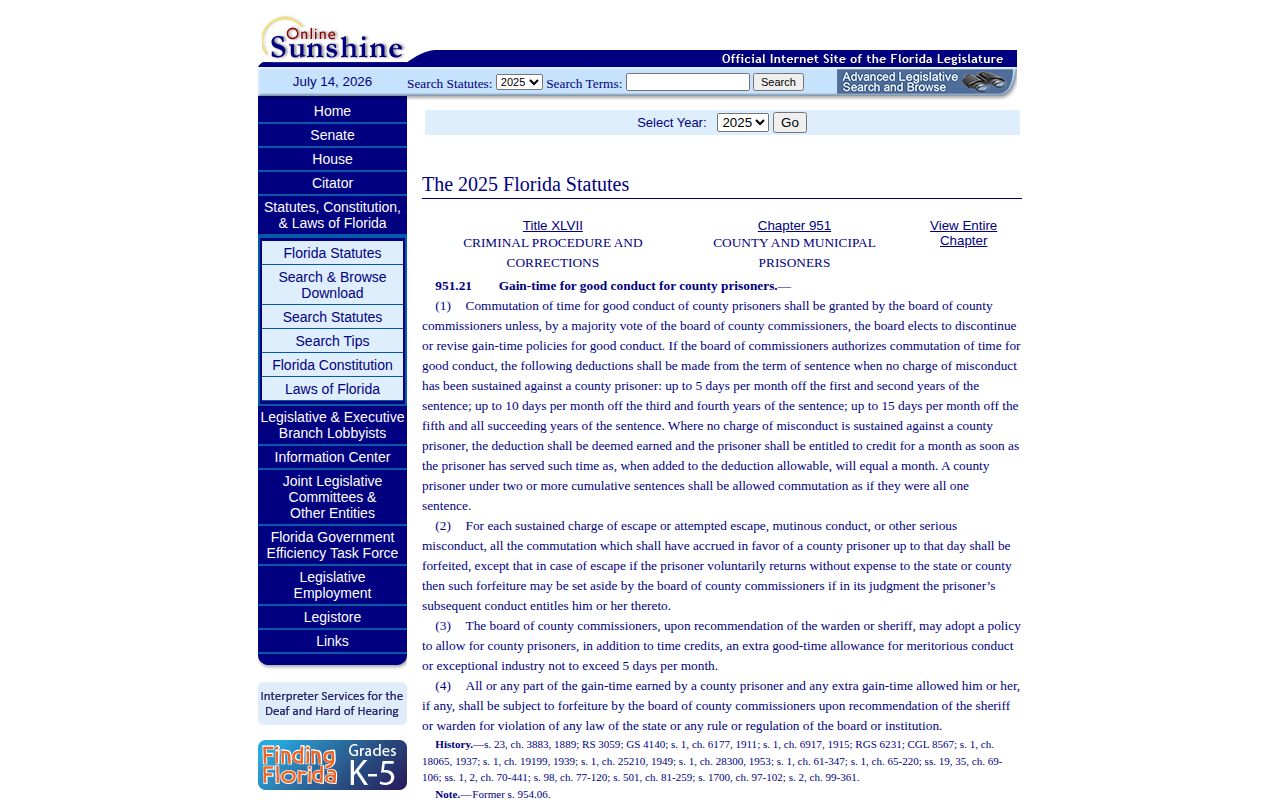
That distinction keeps an FDC tentative date rule from being wrongly imported into a Hernando County jail sentence.
Use the court's judgment and sentence, the jail's current calculation, and the later HCSO Release Date/Time. The jail can be reached at (352) 544-2334. For a precise public document, ask HCSO for the release sheet or authorization tied to the booking number. Mandatory pretrial detention is separate: HCSO states that a DUI or BUI arrestee must remain at least eight hours from arrest even when bond has been paid. That is an initial-release restraint, not county gain-time.
Confirm a Hernando Release Date
Confirmation should come from the custodian. For FDC, match a past Release Date with Date Out-Custody in the released detail or request an official admission-and-release record. For HCDC, use the exact Release Date/Time and inspect transfer fields, holds, bond details, and the court case number. If another authority received the person, that agency must confirm what followed.
VINELink can send custody-change notices when a participating source reports an event, but it is not a certified release record. Registration steps and limits are covered on the Hernando County VINELink Check. For the complete county booking and records-request path, use the Hernando County released-inmate search.
Projected release, physical exit, and end of supervision are three separate milestones. A qualifying person may leave prison at a gain-time or conditional-release point and remain under FDC supervision. The later discharge or termination record closes that next episode. Reading each date in its own record prevents a forecast from being mistaken for a completed release.
Update timing also shapes confirmation. FDC says the released-inmate database refreshes nightly. Inmate Population receives a complete weekly refresh, while release-date and location changes are updated nightly. Supervised Population follows a weekly full refresh with nightly termination-date and location changes. Those published cycles explain why a fresh court order or physical movement may not appear at once. They are not a real-time service promise.
When the posted date and the sentence record conflict, contact FDC rather than estimating the result. The Bureau of Admission and Release handles release questions. Classification and Central Records can address a data discrepancy at (850) 488-9859 or central.classification@fdc.myflorida.com. A formal public-record request may seek the admission-and-release record, actual release date, release mechanism, date out of custody, and releasing institution. For a county sentence, ask HCSO for its existing calculation or release authorization instead. Each office can speak only for the record it maintains.